Space Day 2026 – Responsible and Sustainable Space for European Resilience: A High-Level Forum Held at Obuda University
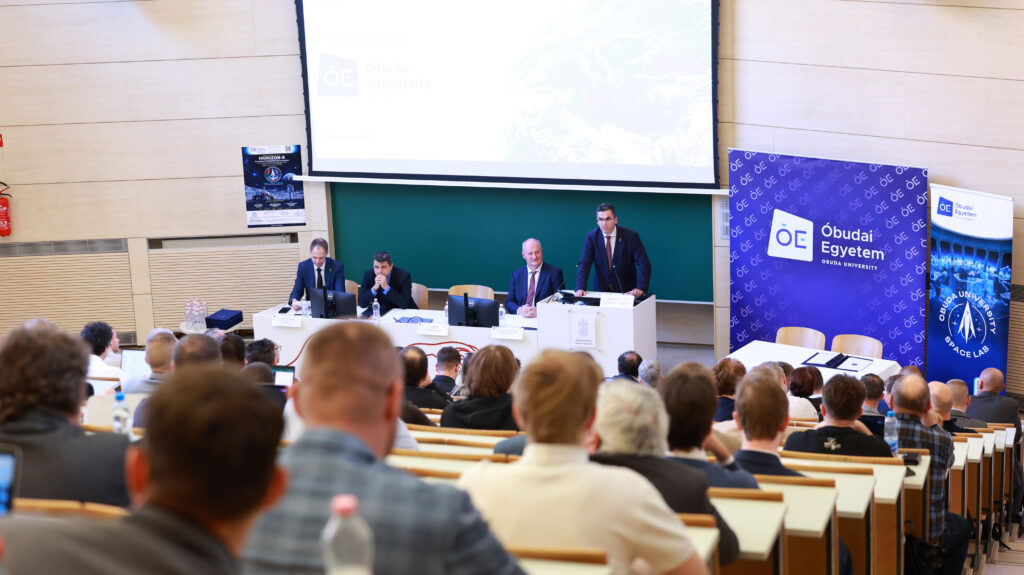
As a highlight of the Hungarian Science Festival, the Space Day 2026 conference, entitled “Responsible and Sustainable Space for European Resilience”, brought together nearly 150 space industry professionals on 4 November.
The space industry has become a critical infrastructure sector for Europe. Secure connectivity, navigation and Earth observation are now integral to our everyday lives and, consequently, to our economies, national security and strategic autonomy. At the same time, geopolitical tensions, macroeconomic volatility, disrupted supply chains, cyber threats and increasingly extreme climate events are constantly testing the resilience of these systems.
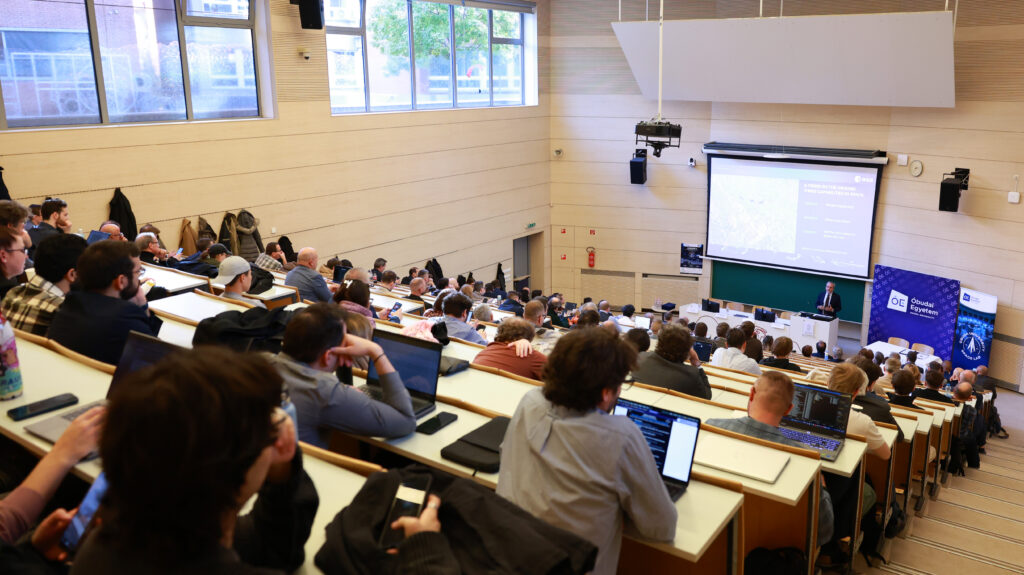
This makes the Space Day particularly significant. For the fourth time, the event brought together European and Central and Eastern European decision-makers and industry experts at Óbuda University to explore how responsible practices, sustainable innovation and stronger regional cooperation can translate into tangible benefits for Europe’s space capabilities, enhancing security, strategic autonomy and competitiveness.
In his opening address, Prof. Dr. Levente Kovács, Rector of Óbuda University, presented the University’s ongoing projects in the field and highlighted its achievements in the space sector. Further details were provided by Prof. Dr. Miklós Kozlovszky, Head of the Obuda University Space Lab.
István Gódor, Deputy State Secretary for Innovation at the Ministry of Science and Technology, outlined the government’s new innovation policy priorities, including its plans for the space sector. Dániel Kristóf, Head of the Space Remote Sensing Department at the Lechner Knowledge Centre, presented the current landscape of space-based government services and developments planned for the near future.
The industry perspective was represented by Hervé Foch, Head of Optical Programmes at Airbus, who demonstrated the remarkable progress made in satellite-based Earth observation and discussed how to manage and make effective use of the exponentially growing volume of data. Andrea Vena, Director of Sustainability at the European Space Agency (ESA), highlighted the importance of using and exploiting space as a valuable resource sustainably, as well as ensuring responsible practices in the design and operation of space systems.
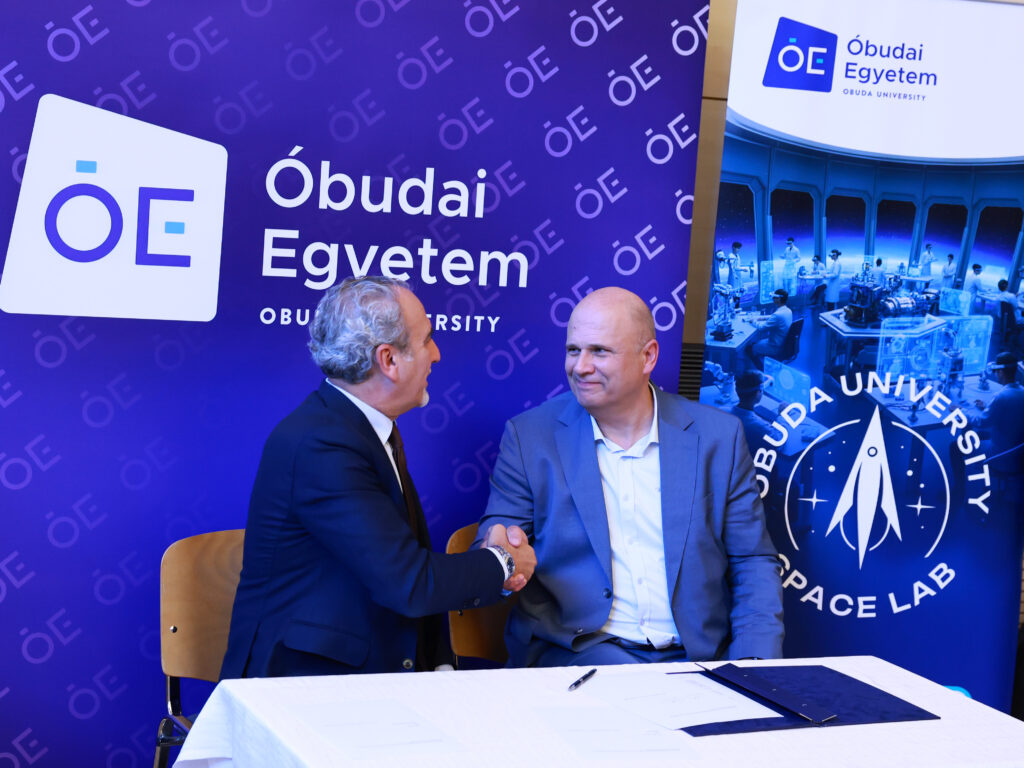
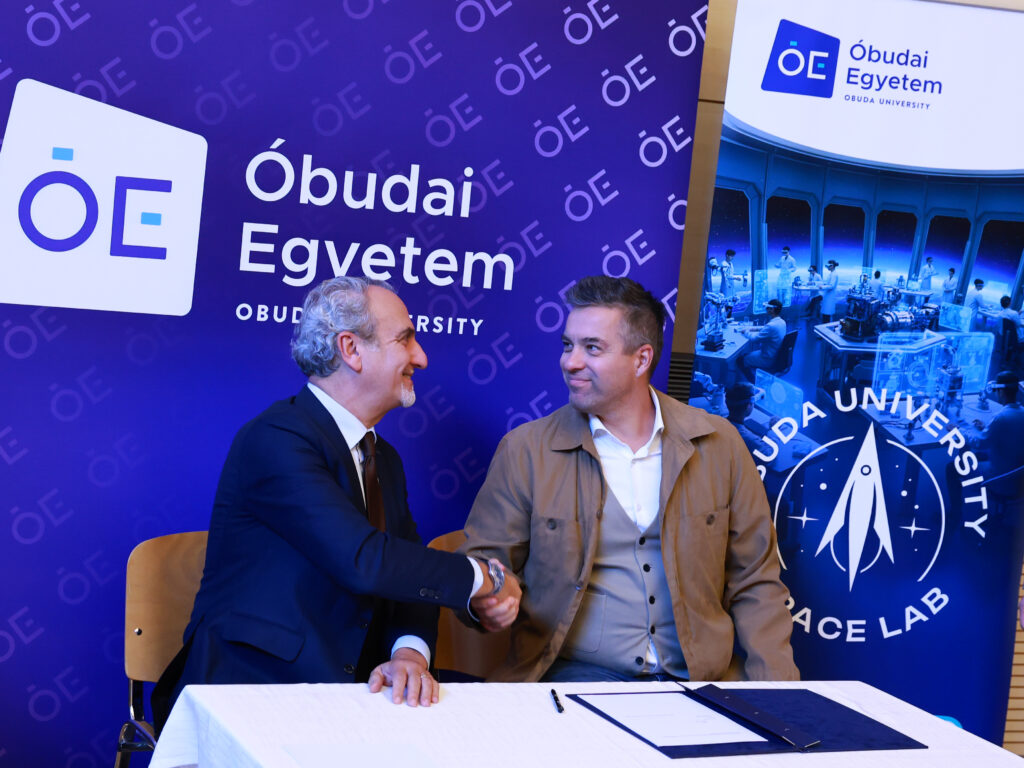
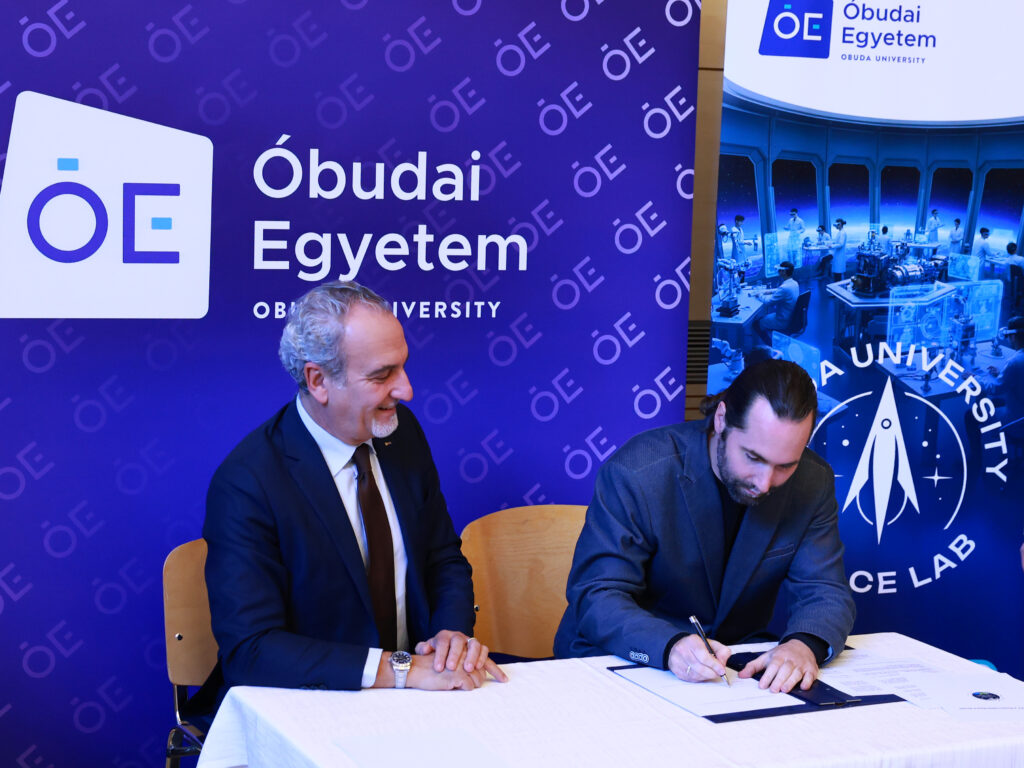
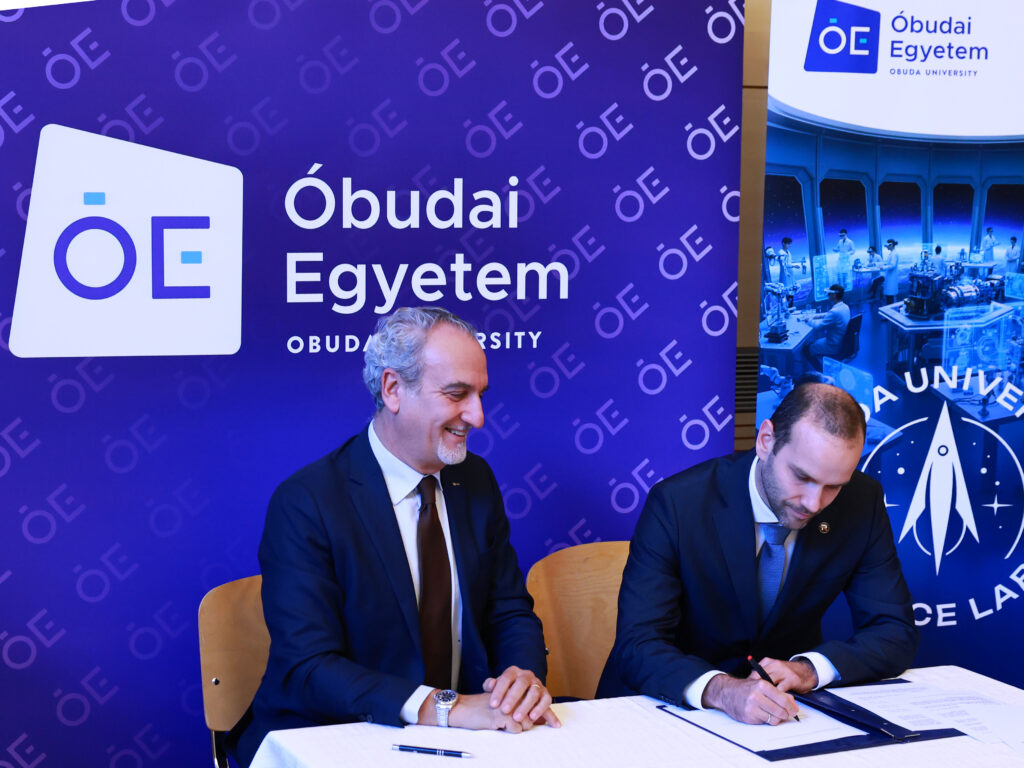
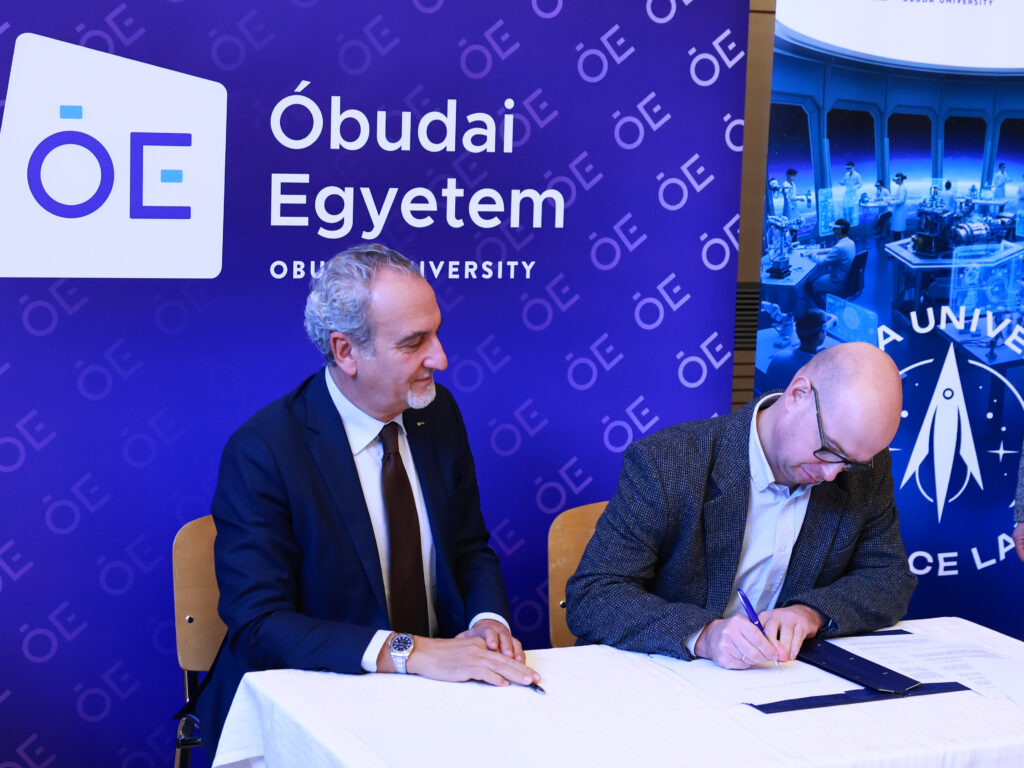
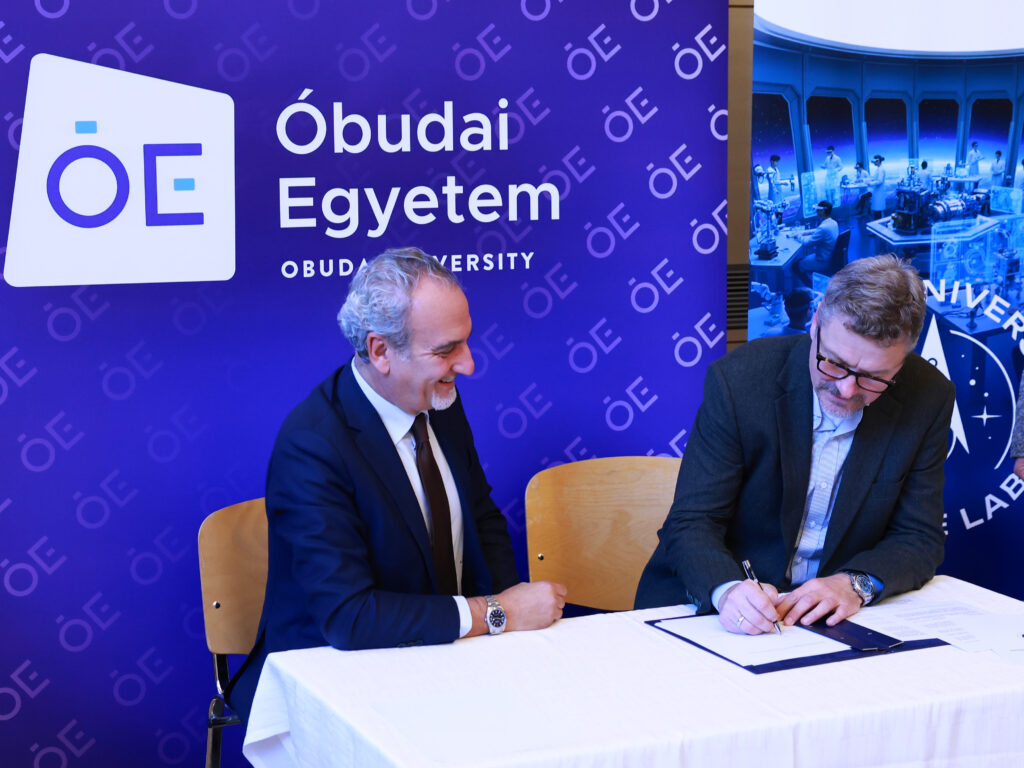
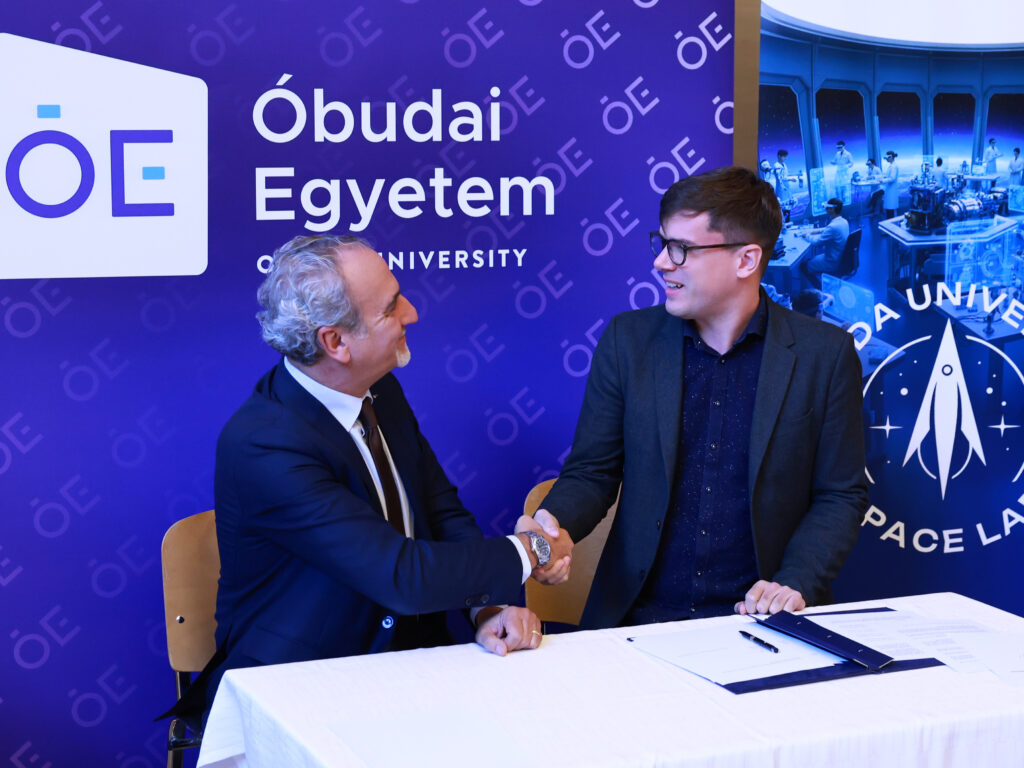
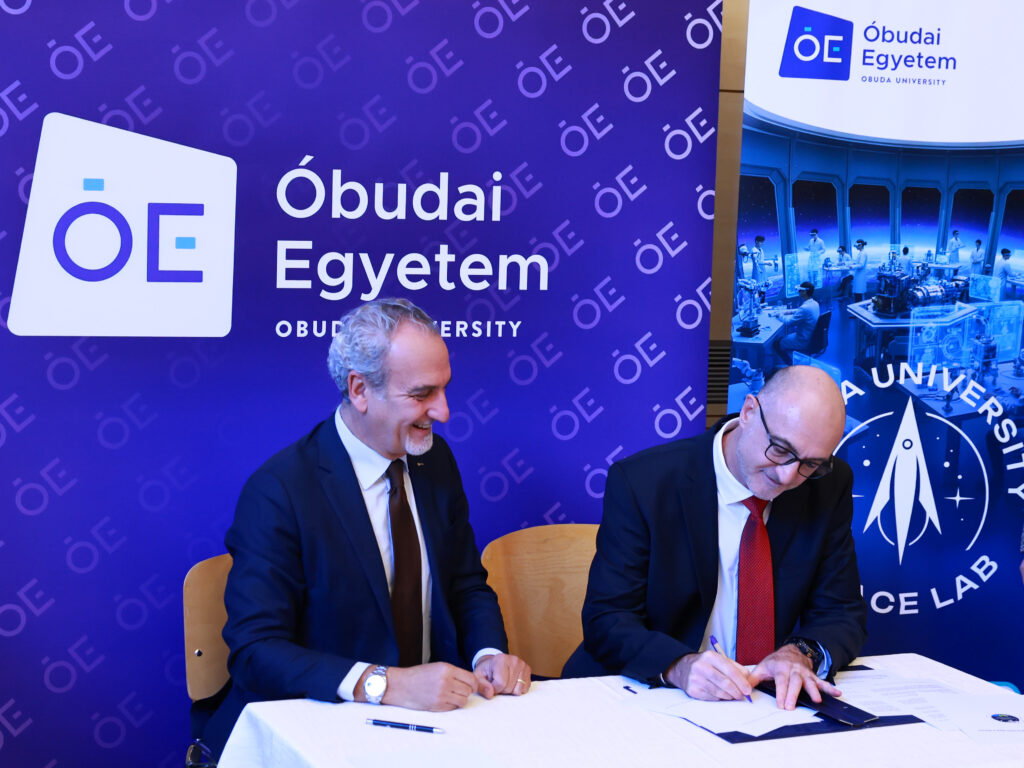
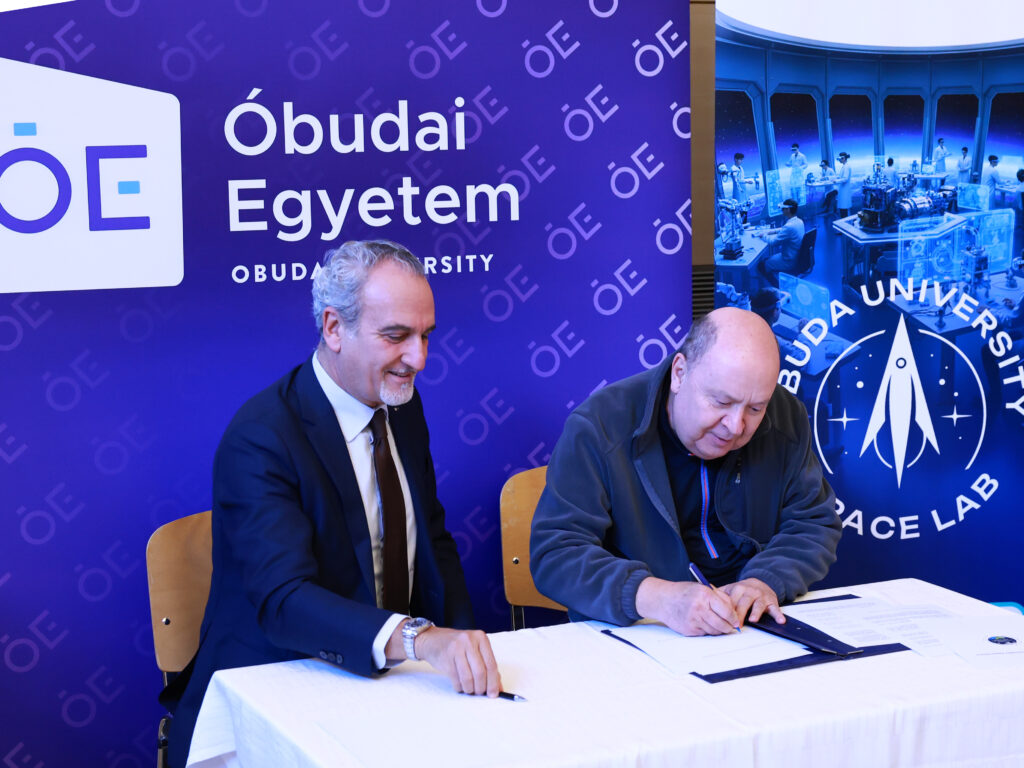
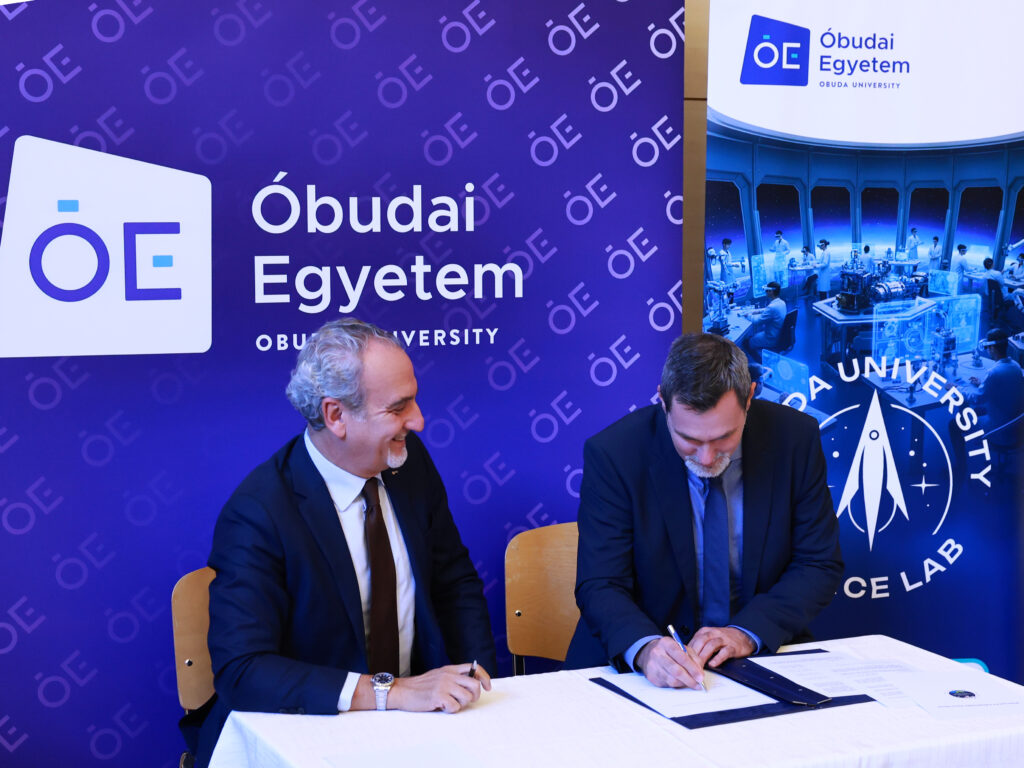
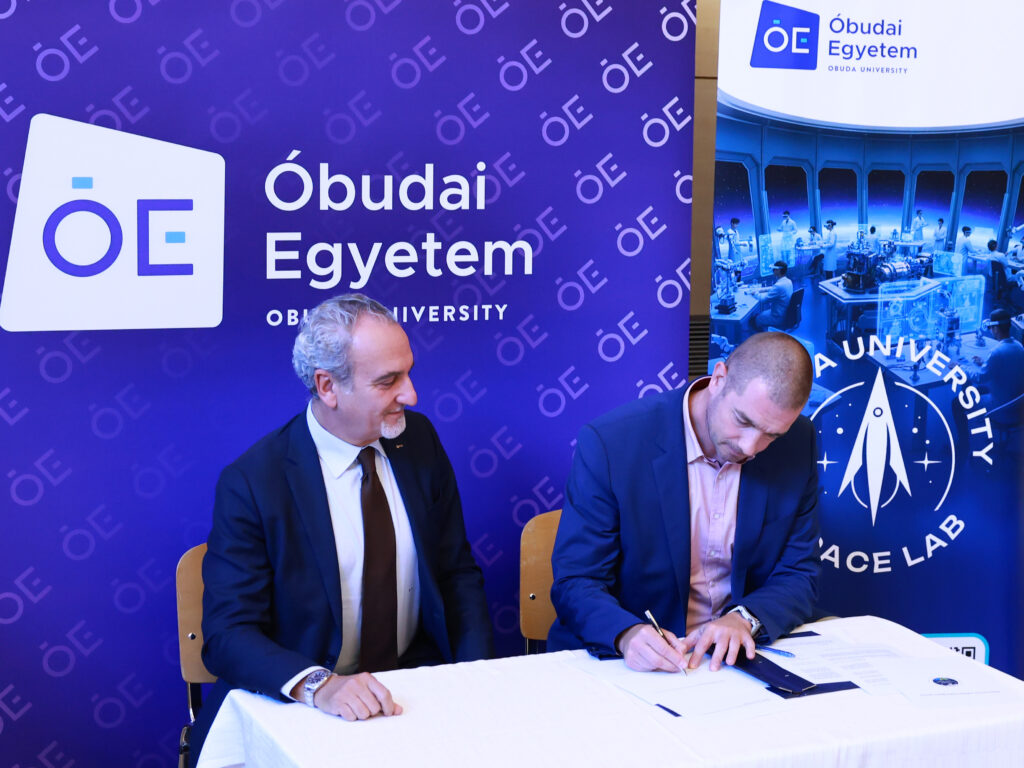
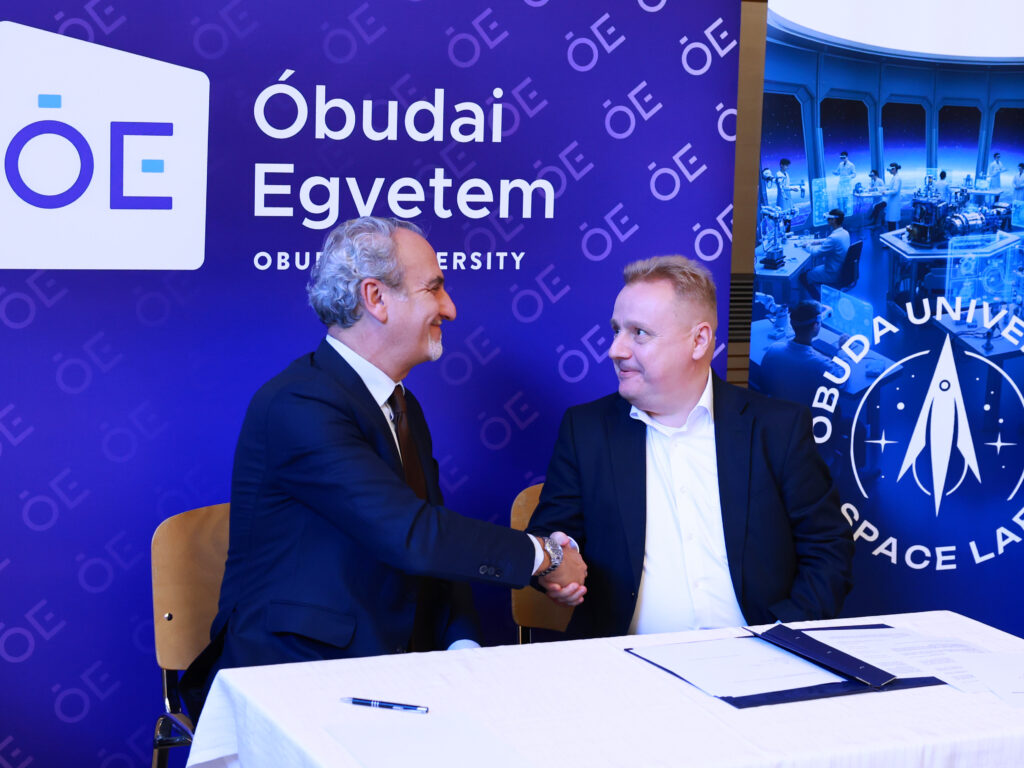
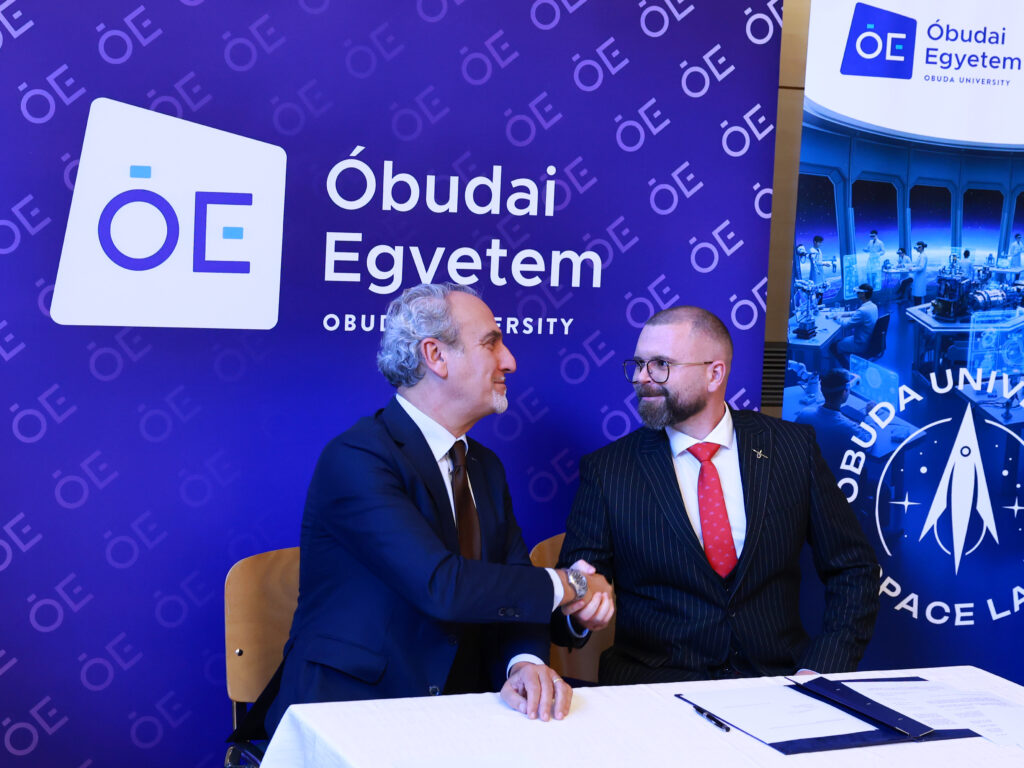
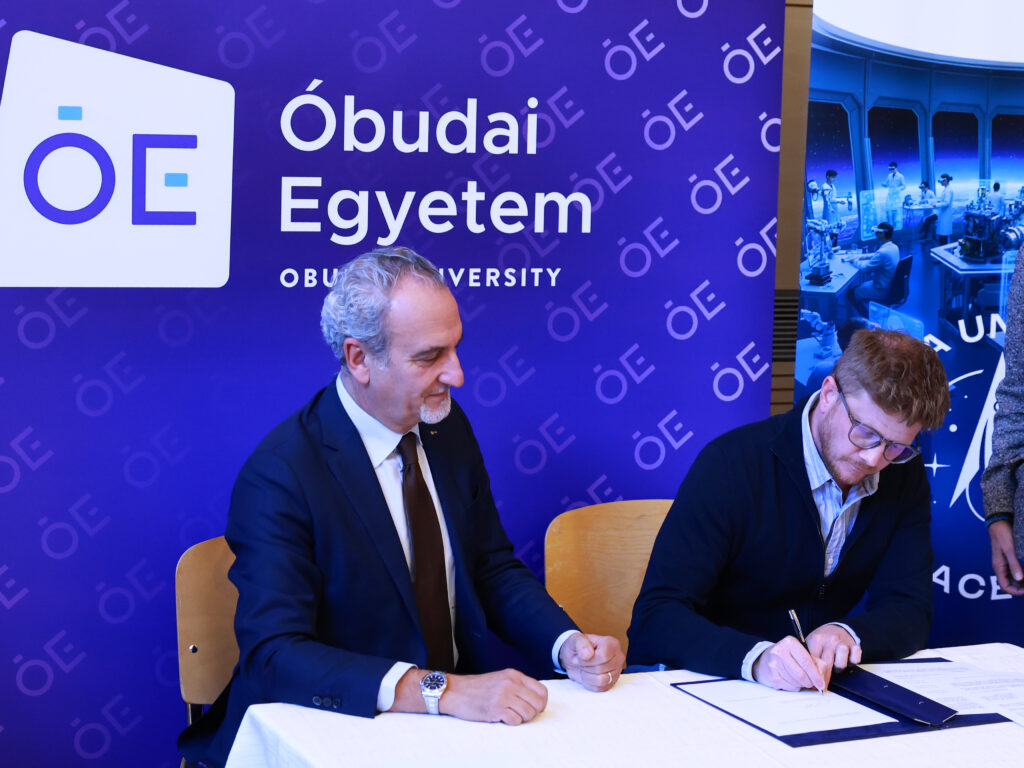
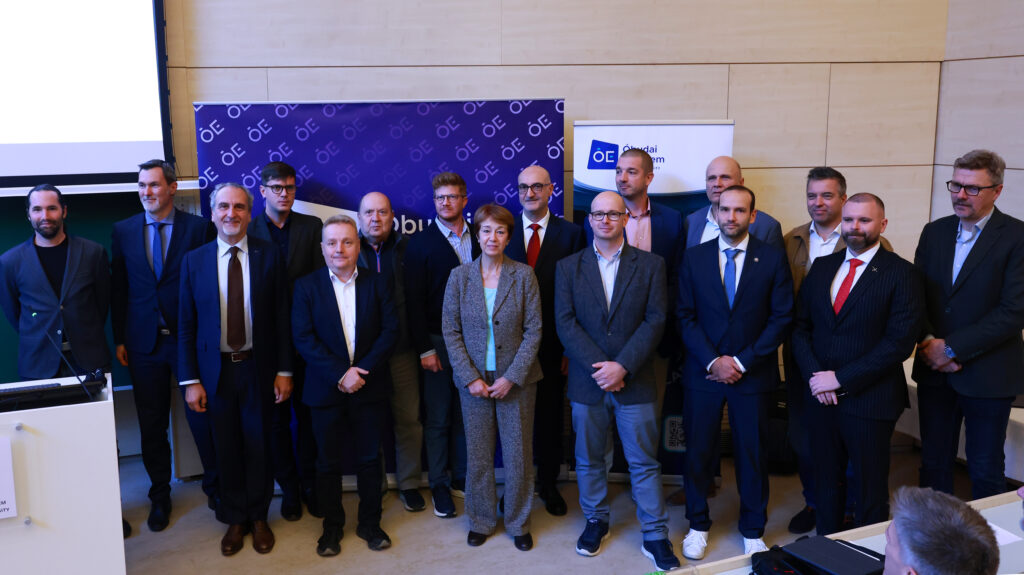
Following the presentations, 14 Hungarian and regional organisations joined the ESA Responsible Space Sector Declaration (Responsible Space Sector). Óbuda University was among the first organisations in Hungary to sign the declaration, with Rector Prof. Dr. Levente Kovács signing on behalf of the University in February last year.
At the time, the Rector emphasised:
„Our commitment significantly supports Óbuda University’s efforts in space research and space sustainability, while also contributing to the development of innovative solutions that benefit society. The initiative aims to establish the foundations for the sustainable development of the space sector and to increase the societal value of space activities.”
The programme continued with a regional space industry roundtable discussion, bringing together Simon Jenner (Bulgarian Aerospace Cluster), Marek Kosuda (Slovak Space Cluster) and Paweł Ziemnicki (Polish Space Industry Association). Moderated by Szabolcs Velkei (HunSpace Cluster), the discussion focused on opportunities for regional cooperation and ways to address shared challenges through joint initiatives.
The final session shifted the focus to transatlantic cooperation. Péter Kristóf, Rector’s Representative for Space Affairs, introduced the recently launched HU-rizont project led by Óbuda University. The project focuses on the development of lunar robotics and spacesuit undergarments, as well as the development of a space economy model. Its international partners include Rice University in Houston and Sapientia Hungarian University of Transylvania.
The presentation also featured a live online contribution from Professor David Alexander, Director of the Rice Space Institute, who shared the latest developments in the US space programme and provided insights into the university’s cutting-edge research projects.
In his closing remarks, Gábor Molnár, Director General of the Kármán Tódor Space Research Centre, once again underlined the strategic importance of the space sector and the responsibility that comes with its development.
The next edition of Space Day will take place on 22 April 2027, jointly organised with Slovakia’s VytahConf. Those interested in attending are already invited to register their interest in advance: