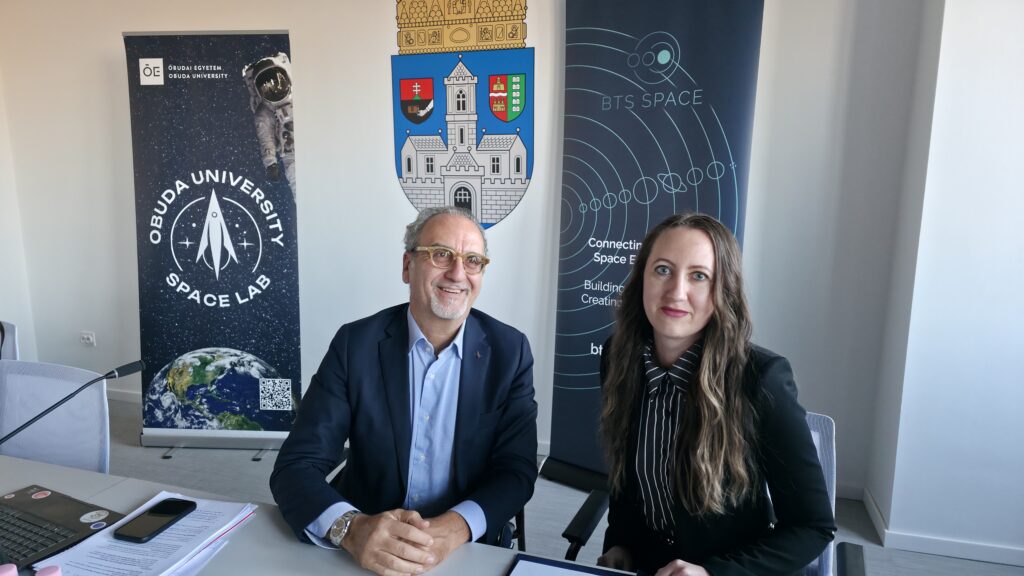
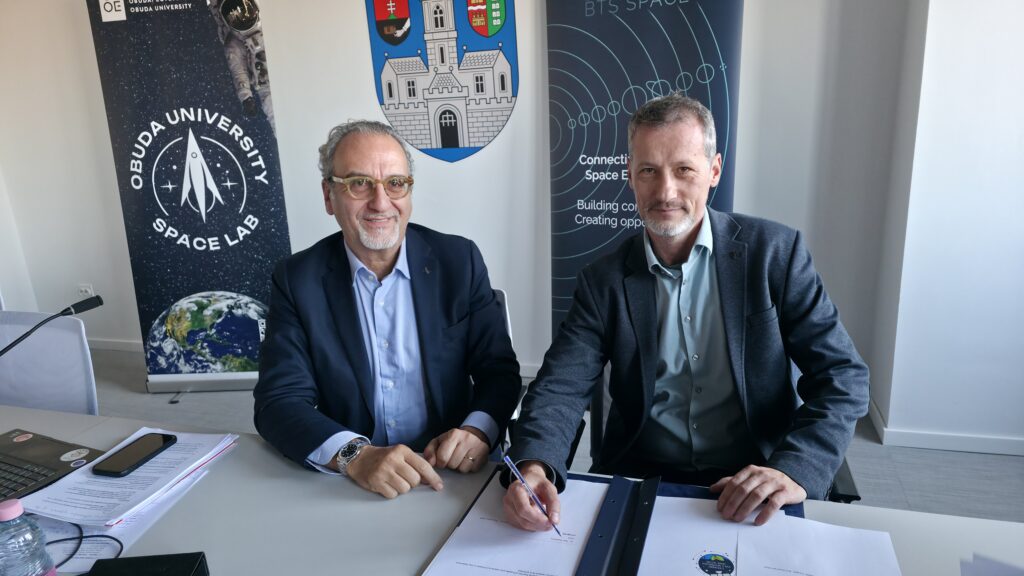
Obuda University hosts the 2026 Responsible Space Sector plenary and welcomes 17 new signatories
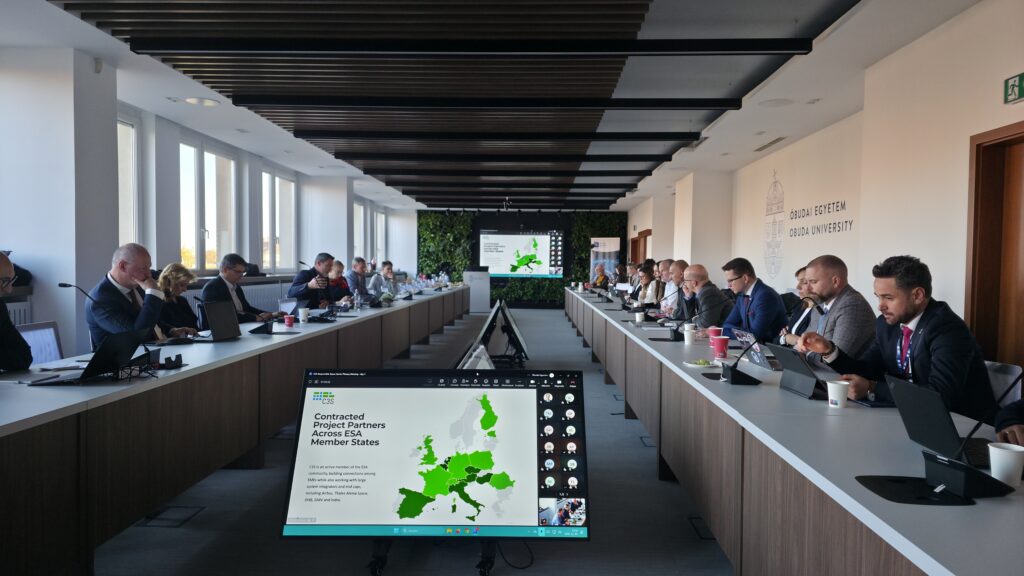
Budapest, Hungary, 5–6 November 2026 — Obuda University hosted the annual plenary meeting of the signatories of the Statement for a Responsible Space Sector, bringing together the European space community to examine how sustainability commitments can guide spacecraft design, organisational capabilities and collective action. The gathering welcomed 17 new signatory organisations, expanding the community’s expertise in engineering, cybersecurity, software, finance and education.
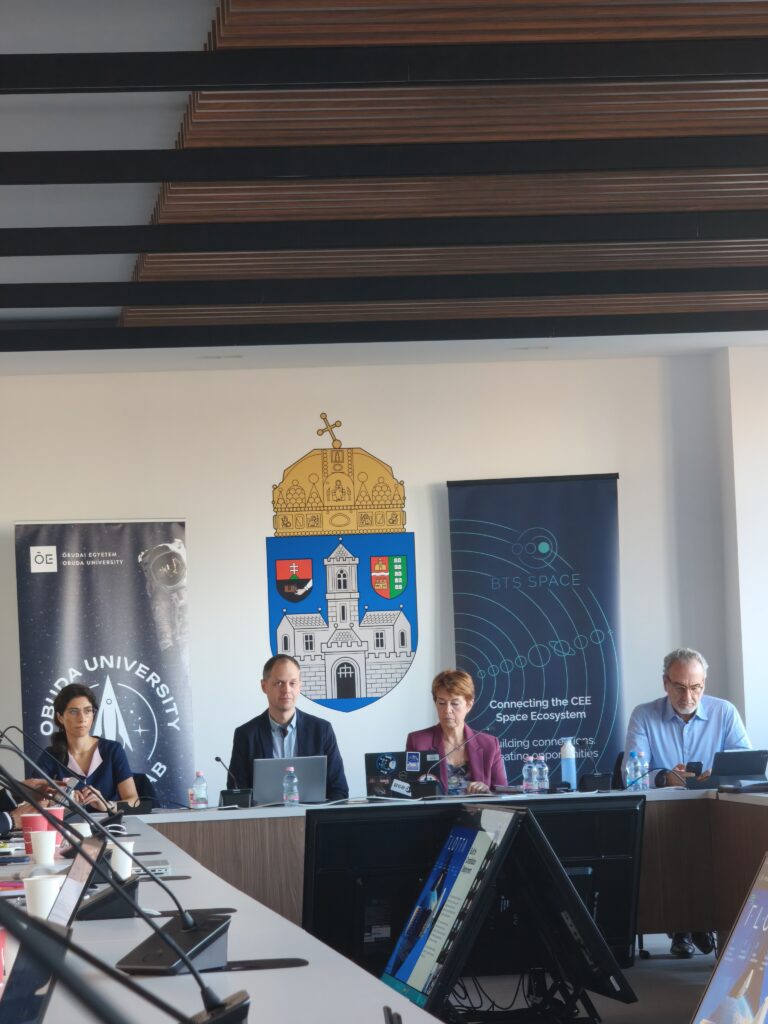
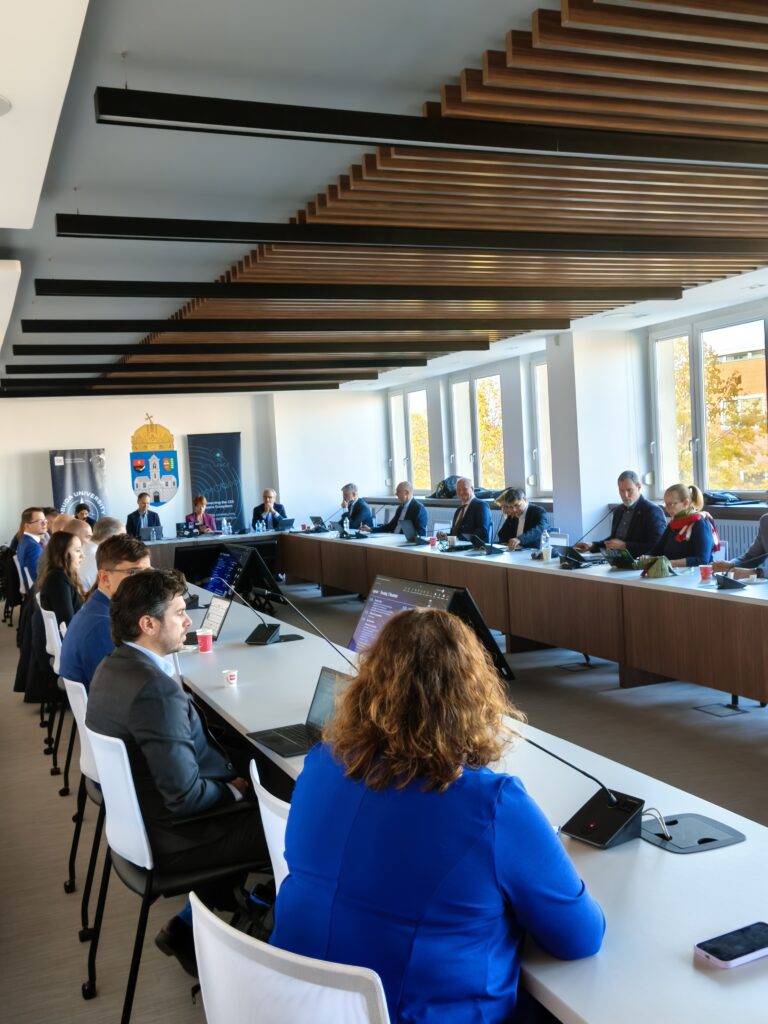
Chaired by Dr Péter Kristóf, Rector’s Envoy for Space Affairs at Obuda University and the Statement’s 2026 Plenary Chair, the meeting took place in the university’s Senate Room in Budapest. Expert presentations and workshops were combined with reviews of working group activities and discussions of priorities for 2027, giving participants an opportunity to connect technical and policy developments with the practical work of their organisations.
Guests were welcomed by Viktória Sugár, Vice Rector of Obuda University; Orsolya Ferencz, Senior Research Fellow at the university’s Kármán Space Center and former Head of the Hungarian Delegation to ESA; Annie Kazarján, Professional Assistant to the Deputy State Secretary for Innovation at Hungary’s Ministry of Science and Technology; Andrea Vena, Chief Sustainability and Climate Officer at the European Space Agency; and Dr Péter Kristóf. Their participation brought university leadership, government and European space institutions into a common discussion of the sector’s responsibilities.
The plenary followed Obuda University’s 4th Space Day on 4 November, held under the theme “Responsible and Sustainable Space for European Resilience”. The signing ceremony during Space Day connected the wider Hungarian and regional space ecosystem with the Statement community. New signatories were subsequently welcomed at the plenary and invited to introduce their organisations.
First adopted in November 2022, the Statement provides a shared framework for socially and environmentally responsible space activities. It promotes the long-term development of the space sector and its contribution to society, including environmental protection on Earth and in space, responsible governance, inclusion and cooperation among European space actors.
New signatories and their representatives
The 17 new signatory organisations and their representatives were:
| Organisation | Representative | Title |
| BTS Space Ltd. | Sándor Kulcsár | Founder and Partner |
| C3S LLC | Gyula Horváth | CEO |
| eCon Engineering Ltd. | Gábor Kiglics | CEO |
| GeoIQ Imaging Ltd. | Gábor Kákonyi | CEO |
| Geo-Sentinel Ltd. | Péter Farkas | CEO |
| GTGM Ltd. | Dr Szabolcs Tóth | CEO |
| HolistiCRM Ltd. | Csongor Fekete | CEO |
| Orion Space Generation Foundation | László Borda | Chairman |
| PCB Design Ltd. | Gábor Lakatos | Business Development Manager |
| Polish Space Industry Association | Paweł Ziemnicki | Head of the Association Bureau |
| Qyntar Plc. | Péter Bolesza Szandra Steinle | CEO CTO |
| REMRED Plc. | Levente Balogh | CEO |
| Sigma Technologies | Balázs Supola | Head of Space Competence Center |
| Skytrek Ltd. | Don Koulauzos | CEO |
| Slovak Space Cluster | Marek Košuda | Chairman |
| SOLEYE Ltd. | Dr László Francsics | CEO |
| Stradamus Plc. | Áron Boros | CEO |
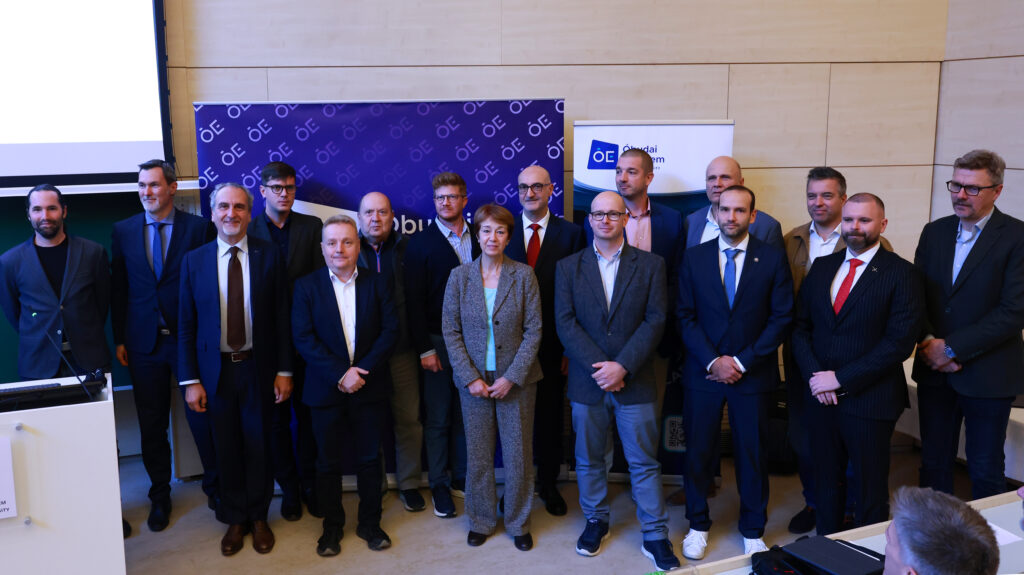
Together, the new signatories contribute capabilities spanning small satellites, engineering simulation, remote sensing, geodetic monitoring, optical instrumentation, electronic hardware, analytics, consulting and finance. Industry associations, a regional cluster and an educational foundation broaden the community’s links to business development, skills and public engagement. Their participation reflects the range of organisations involved in putting responsible space principles into practice throughout the value chain.
Responsible design skills and policy
Thursday’s technical programme opened with Gyula Horváth, CEO of C3S LLC, on responsible spacecraft design. His session examined how spacecraft can meet sustainability criteria and how CubeSats and small satellites can support sustainability on Earth. It connected engineering decisions about the spacecraft itself with the benefits delivered through space applications.
Paweł Ziemnicki, Head of the Association Bureau at the Polish Space Industry Association, addressed “From Sustainable Space Commitments to Organisational Capability: Skills for Implementation”. His presentation traced the connection between international space treaties, voluntary debris mitigation and long-term sustainability guidelines, planetary protection, European initiatives and national legislation. It distinguished these different frameworks while showing that implementation depends on people able to apply them in design, operations, environmental assessment and licensing.
The practical exercise asked participants to plan the skills needed for a hypothetical science mission to Jupiter’s moon Europa in the 2040s, with the smallest possible environmental footprint throughout its life cycle. Groups considered five stages, from planning and manufacturing to launch, interplanetary cruise and operations at Europa. Each group was asked to prioritise a maximum of five roles and justify their environmental contribution, making the link between sustainability commitments and staffing decisions explicit.
Human spaceflight provided another perspective on responsibility. Norbert Juhos of Obuda University, Senior Space Project Manager and former Mission Operations and Training Director, presented the Hungarian-to-Orbit programme, covering astronaut selection, training and longer-term impacts. His contribution connected mission preparation with the capabilities and benefits that a national human spaceflight programme can develop.
Tomas Hrozensky, Associate Director of European Engagement, Communication and Media at the European Space Policy Institute, presented “The future of responsible space activities: Insights from a policy think-tank”. He placed responsibility within Europe’s growing political and financial commitment to space, alongside the increasing importance of security, defence and strategic autonomy. His presentation also examined the tightening of international space safety and sustainability mechanisms.
Hrozensky connected these developments with public understanding and the use of space capabilities beyond the sector. An October 2026 Ipsos bva survey for ESPI, cited in his presentation, found that 63% of respondents believed investment in space activities contributed to economic growth to some extent or a great deal. Examples on climate resilience and water policy illustrated the need to connect space services with public policy and user needs, including responses to drought, flooding, water scarcity and ecosystem degradation.
Community progress and priorities for 2027
Working group feedback provided a more detailed picture of the community’s progress. The ecodesign and life-cycle assessment work emphasised a shift from measuring environmental impacts to identifying and implementing design solutions. A practical toolkit for new and existing signatories had been completed and made available through the Statement’s website, bringing together resources, good practices and information on community activities.
The circular economy working group reported that research and stakeholder input had been consolidated into a draft white paper, with publication planned by the end of 2026. Taxonomy 4 Space work examined how environmental taxonomy criteria could support the sector’s access to sustainable finance, including draft criteria for spacecraft and launcher manufacturing. The updates also clarified the status of other activities: the Scope 3 greenhouse gas methodology group was on hold in 2026, and the Sustainability Talks working group had formally closed.
Friday’s Statement session, co-chaired by Luise Clemens, Strategy Planning Analyst at the European Space Agency, reviewed the Ways of Working and proposals to increase participation. A proposed steering committee of three to five active members would help coordinate and select one or two initiatives for the coming year. Changes to the community’s working arrangements would be submitted for approval.
The European Space Sector Decarbonisation Roadmap featured among the priorities presented for 2027. The planned work would establish an emissions baseline, assess future scenarios and identify targets and measures across the sector, with ESA leading the calculation effort and industry providing data. Preparations for cooperation with the European Commission, EUROSPACE, ESPI and Eurisy were also outlined.
Sustainable procurement was another area for continued cooperation. ESA reported on a two-year pilot using a Code of Conduct and a supplier self-assessment questionnaire. Further sharing of procurement practices and common approaches with industry was presented as a way to strengthen organisations’ sustainability capabilities. The programme also introduced plans to move the Statement’s website to esa.int, with the transition date still to be confirmed.
Networking with members of the Hungarian space ecosystem complemented the formal sessions. The programme also offered an optional campus visit, including the university’s history exhibition and Robotics Lab, led by Prof. Péter Galambos, Vice Rector for Innovation. The closing programme addressed renewed commitments to the Statement and the election of the next Chair.
By hosting the plenary alongside Space Day, Obuda University connected Hungarian and regional organisations with the wider European responsible space community. The combination of new signatories, practical workshops and working group reviews gave the Budapest meeting a focus on the capabilities and cooperation needed to carry sustainability commitments into everyday space activities.